

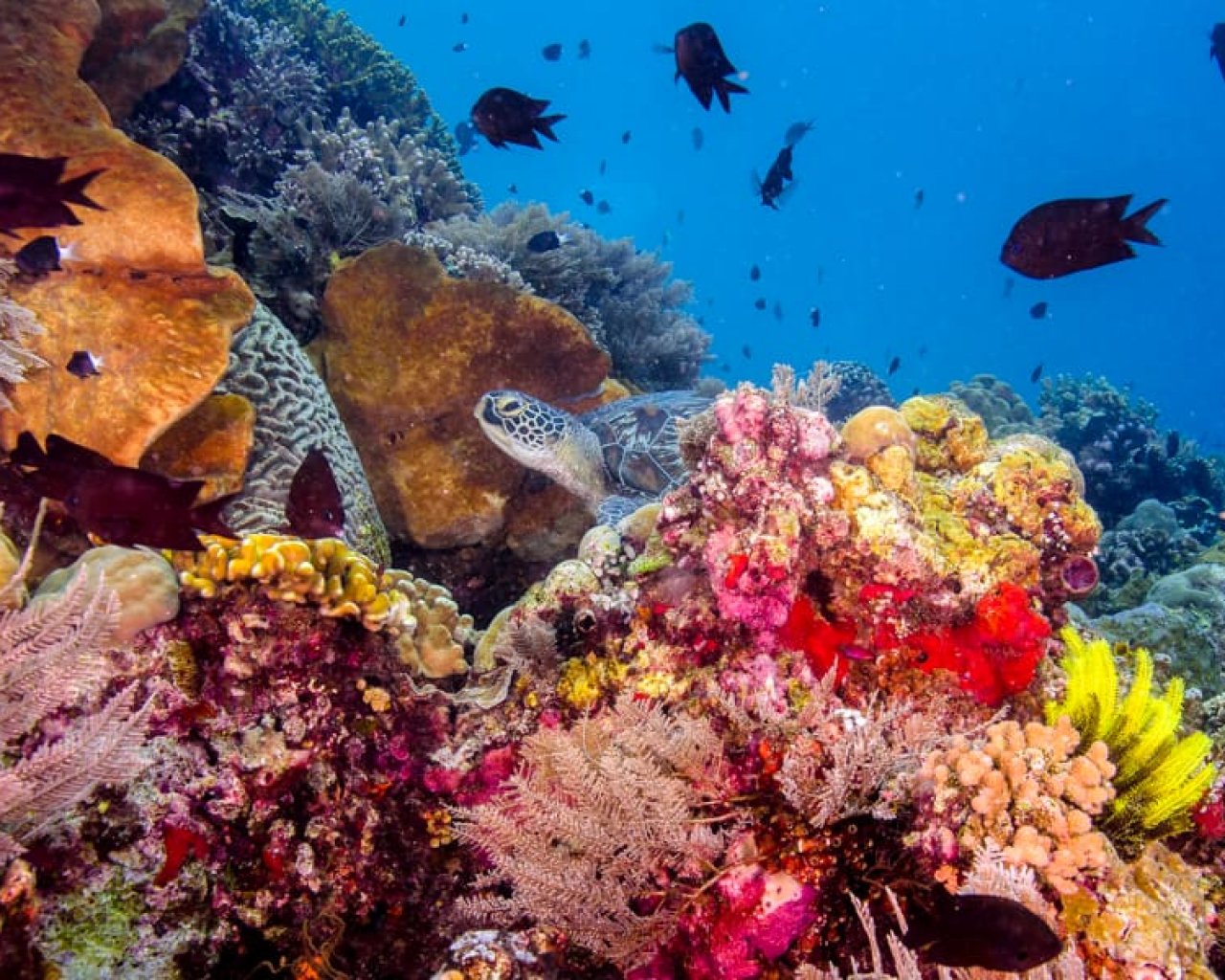
Corals, one of the most fascinating organisms in the oceans, attract attention not only for their aesthetic beauty but also for their critical importance to the ecological balance of our planet. Although coral reefs cover less than approximately 1% of the Earth’s surface, they are home to about 25% of all marine species. For this reason, scientists often refer to coral reefs as the “rainforests of the oceans.”
Corals play a vital role for marine life, coastal ecosystems, and even human life. They have significant impacts in many areas, from fisheries to tourism, from coastal protection to biodiversity. In this comprehensive guide, we will examine in detail what corals are, how they form, why they are so important, and the threats they face today.
What Are Corals?
Although corals are often thought of as plants or rocks, they are actually marine animals. Scientifically, corals belong to the phylum Cnidaria and are related to jellyfish.
A coral is actually a colony made up of thousands of tiny organisms. These small organisms are called polyps.
Characteristics of polyps:
-
Their diameter is usually a few millimeters
-
They have a mouth and tentacles
-
They secrete calcium carbonate to form a hard skeleton
Over time, these skeletons accumulate on top of one another and form coral reefs.
How Do Coral Reefs Form?
Coral reefs form when the calcium carbonate structures produced by polyps accumulate over centuries or even thousands of years. This process is extremely slow.
The growth rate of a coral reef:
-
On average 1–3 cm per year
Some large reef systems may be more than 10,000 years old.
The world’s largest coral system, the Great Barrier Reef, is approximately 2,300 kilometers long and can even be seen from space.
Where Do Corals Get Their Colors?
The bright red, orange, yellow, or purple colors of corals do not actually come from the corals themselves but from microscopic algae living inside them.
These algae are called:
Zooxanthellae
These algae live in a symbiotic relationship with corals.
Benefits provided by the algae:
-
They produce energy through photosynthesis
-
They provide nutrients to corals
-
They give corals their colors
Benefits provided by corals:
-
A safe living environment for the algae
-
Carbon dioxide and nutrients
When this delicate relationship is disrupted, corals may experience bleaching.
What Is Coral Bleaching?
Coral bleaching occurs when corals lose the algae living inside them.
Scientifically, this phenomenon is called coral bleaching.
Main factors that cause bleaching:
-
rising sea temperatures
-
ocean acidification
-
pollution
-
excessive sunlight
-
diseases
When the algae leave, corals:
-
lose their color
-
stop producing energy
-
may die if the condition continues for a long time
In recent years, coral bleaching events have increased rapidly, especially due to global warming.
Importance of Coral Reefs for the Ecosystem
Coral reefs are not only visually impressive but also one of the most important ecosystems on our planet.
1. Biodiversity
Coral reefs provide habitat for:
-
more than 4,000 species of fish
-
thousands of invertebrates
-
sea turtles
-
sharks
For this reason, coral reefs are considered one of the fundamental pillars of marine ecosystems.
2. Coastal Protection
Coral reefs act as natural breakwaters.
Their benefits include:
-
reducing storm waves
-
preventing coastal erosion
-
potentially reducing the impact of tsunamis
Therefore, corals provide natural protection for many islands and coastal regions.
3. Economic Contribution
Coral reefs contribute billions of dollars to the global economy every year.
Main sectors include:
-
tourism
-
diving tourism
-
fisheries
-
pharmaceutical research
Many tropical countries’ economies depend heavily on coral reefs.
The Most Important Coral Reefs in the World
Great Barrier Reef (Australia)
The Great Barrier Reef is the largest coral reef system in the world.
Features:
-
more than 2,900 reefs
-
900 islands
-
an area of 344,000 km²
However, in recent years this reef has faced severe bleaching events.
Coral Triangle
The Coral Triangle is a region covering Indonesia, the Philippines, Malaysia, Papua New Guinea, the Solomon Islands, and Timor-Leste.
Features:
-
the richest marine biodiversity in the world
-
more than 600 coral species
-
more than 2,000 fish species
For this reason, the region is often called the “Amazon of the seas.”
Factors Threatening Corals
Today, coral reefs are under serious threat.
Major threats include:
Global Warming
Rising ocean temperatures cause bleaching.
Ocean Acidification
Increasing carbon dioxide makes it difficult for coral skeletons to form.
Overfishing
Disrupts the balance of the ecosystem.
Marine Pollution
Plastic, chemicals, and waste can kill corals.
Tourism Pressure
Uncontrolled diving and boat activities can damage reefs.
Coral Conservation Efforts
Many projects around the world are being carried out to protect coral reefs.
Notable initiatives include:
-
coral nurseries
-
artificial reef projects
-
marine protected areas
-
sustainable tourism policies
Many of these efforts are supported by the National Oceanic and Atmospheric Administration and various international environmental organizations.
The Future of the Oceans Depends on Corals
Although corals may seem like small and fragile organisms, they form one of the most critical ecosystems on our planet. Coral reefs support ocean biodiversity, protect coastlines, and provide livelihoods for millions of people, making them a fundamental pillar of life on Earth.
However, due to global climate change and human activities, these ecosystems are rapidly deteriorating. Scientists warn that if the current trend continues, a large portion of coral reefs could disappear by the end of this century.
For this reason, protecting corals is seen as a critical responsibility not only for marine life but also for the future of our planet.
